The Student Nonviolent Coordinating Committee (SNCC) was established in 1960 at a conference of more than 120 student delegates from sit-in movements in 12 states. Key figures to emerge from the movement include Diane Nash from Fisk University, Charles McDew from South Carolina State University, and John Lewis from American Baptist Theological Seminary.[1]
SNCC organized Freedom Rides in 1961, riding buses through the South after the Supreme Court ruled to desegregate interstate travel. In 1962, SNCC organized Voter Registration Campaigns in the South. In 1964, SNCC organized Freedom Summer to focus on Black Mississippians who wanted to vote. [2]
SNCC and the local people whom they worked with played a key role in the passing of the Voting Rights Act in 1965.[3] Volunteers and local people exercising their constitutional rights faced violence at every step of the way. SNCC had a great need for photographers to document the lived experiences of the movement. [4] The presence of photographers also deterred violence against civil rights marchers to some degree[5] though photographers themselves were sometimes arrested.[6] SNCC’s photography department, started in 1962 by University of Chicago campus magazine photographer Danny Lyon, grew into a multiracial team of more than ten.
The work of SNCC photographers was seen in educational materials, newspapers, and even on the Senate floor. [7] This post highlights the collaborations between three SNCC photographers of diverse backgrounds – Bobby Fletcher, Maria Varela and Matt Herron. Other movement photographers not listed here also have unique life stories as activists and creatives. We encourage you to learn about all of them. Learn about more of them here.
Bobby Fletcher (1938-)
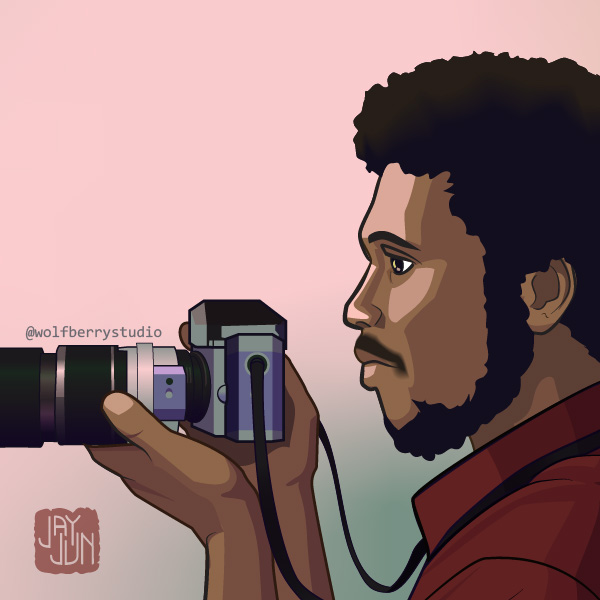
Robert E. “Bob” Fletcher was born in Detroit, MI. He studied History and English at Fisk University and Wayne State University.[8] Fletcher also took classes at Detroit Institute of Arts, putting what he learned about composition and perspective into his photography for the National Student Association’s Detroit Tutorial Program which he was administering. [9]
In the spring of 1964, Fletcher was photographing a group of protesters in front of a bar in New York when police arrested him for “disorderly conduct”. After spending a night in jail, he decided to apply to teach at a SNCC Freedom School in Mississippi. Fletcher said. “If you can get arrested for photographing a demonstration in Harlem, then I’d get arrested for something serious.”[10]
in Mississippi, Fletcher met Matt Herron and Cliff Vaughs from SNCC’s photography department. He became a prolific SNCC photographer from 1964-1968, capturing the humanity and agency of Black people in the Deep South and the racist violence they faced during their political organizing. In 1965, he collaborated with his SNCC colleague Maria Varela to create filmstrips that showed how local people were organizing themselves. These educational filmstrips in turn inspired more local action.[11]
After his time with SNCC, Fletcher went to Mozambique to document FRELIMO’s struggle for independence from Portuguese colonial rule. There, he worked on 2 documentaries, A Luta Continua (1972) and O Povo Organizado (1976), with African American lawyer Robert F. Van Lierop.[12]
Maria Varela (1940-)
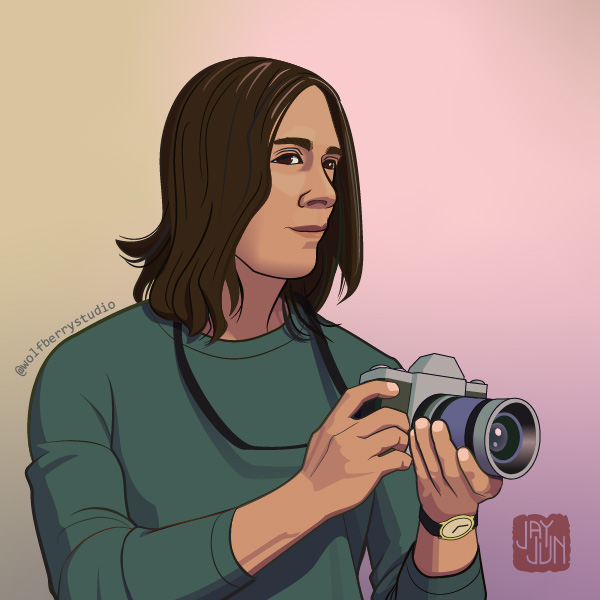
Maria Varela was raised by a Mexican American father and Irish American mother in Chicago. She became an organizer with Young Christian Students (YCS)[13], mobilizing Catholic students to support the sit-ins.[14] In 1963, she was recruited to work for SNCC, who assigned her to support Father Maurice Ouellet, the French-Canadian pastor of a Black Catholic parish in Selma. Ouellet had requested adult literacy training for his parishioners so that they could take the voter registration test.[15]
For the next 3 years, Varela produced adult education and training materials for SNCC. [16] To illustrate these materials, she asked SNCC photographer Bob Fletcher for photos showing local Black people proactively changing their segregated communities. Eventually, he suggested that she learn to take pictures herself. Fletcher sent Valera to Matt Herron, who was offering a week of free photography training to SNCC members. After Herron’s training, she joined the SNCC photography department. [17] Valera worked with Fannie Lou Hamer on Hamer’s first autobiography, bonding over similarities in Mexican and Southern cuisine.[18] As a “Latina in the middle of a Black and White struggle”, Valera described herself as occupying a “liminal space”. She said, “You don’t know how people are relating to you until it’s all one-on- one. Very few Black or White people had experiences with Latinos. So there was nothing for them to refer to.” [19]
After her time at SNCC, Valera went to work with Reies López Tijerina of the Land Grant Movement in the Southwest. She took many photographs of the Chicano Movement to address the lack of visibility of Latine rights in the media.[20]
Matt Herron (1931-2020)
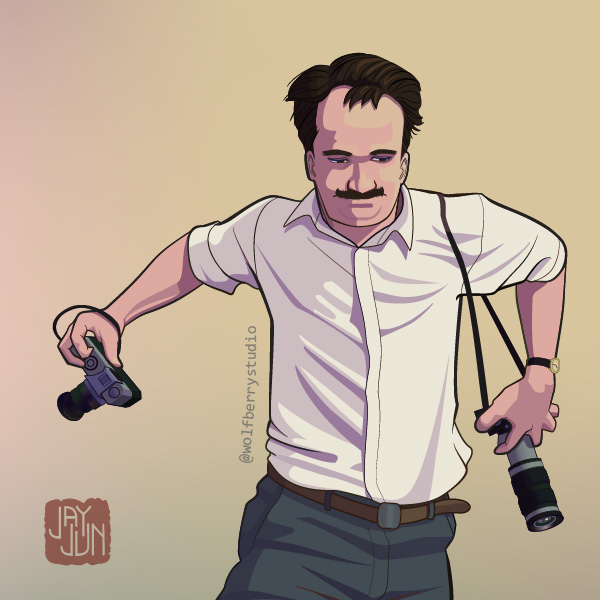
Matt Herron was born in Rochester, NY. A conscientious objector during the Korean War, he went to Ramallah to teach at a Quaker school. There, he developed an interest in photography and spent time with photojournalists.[21]
Herron studied photography with Minor White.In 1960, he took assignments from Look and Life magazines to document lunch counter sit-ins in Tennessee and North Carolina.[22]
After being arrested for attempting to integrate an amusement park in Maryland, Herron moved to Jackson, MS with his wife and children in 1963. [23] He organized a team of photographers for his Southern Documentary Project in 1964, sending them out to document the process of working for social change during Freedom Summer.
In 1965, Herron’s photo of a Mississippi highway patrolman wresting an American flag from a five-year-old outside the Governor’s mansion in Mississippi won the World Press Photo Contest.[24] The child in the photo, Anthony Quin, grew up to earn a PhD in education administration in spite of the constant bullying that he experienced as part of the first cohort of Black students to integrate McComb public schools. Herron and Quin reunited in Jackson, Mississippi in 2014 for the 50th anniversary of Freedom Summer.[25] The same year, Herron published the book Mississippi Eyes, the story of the Southern Documentary Project.
References
[1] “The Student Nonviolent Coordinating Committee (SNCC)”, National Archives, https://www.archives.gov/research/african-americans/black-power/sncc. Accessed 19 Nov. 2025.
[2] “Freedom Summer”, The Martin Luther King, Jr. Research and Education Institute, https://kinginstitute.stanford.edu/freedom-summer. Accessed 19 Nov. 2025.
[3] Richardson, Judy; Emilye Crosby, “The Voting Rights Act beyond the Headlines”, Southern Cultures, https://www.southerncultures.org/article/the-voting-rights-act-beyond-the-headlines/. Accessed 19 Nov. 2025.
[4] “Bobby Fletcher”, SNCC Digital Gateway, https://snccdigital.org/people/bobby-fletcher/. Accessed 19 Nov. 2025.
[5] “SNCC Photographers”, SNCC Legacy Project, https://sncclegacyproject.org/sncc-photographers/ Accessed 19 Nov. 2025.
[6] “DANNY LYON. Clifford Vaughs, a SNCC photographer is arrested, torn between troops and demonstrators. Cambridge, Maryland, 1964“, Not an Ostrich: & Other Images from America’s Library, Library of Congress. https://www.loc.gov/exhibitions/images-from-americas-library/about-this-exhibition/photographers/danny-lyon-cillford-vaughs/. Accessed 19 Nov. 2025.
[8] Fletcher, Robert. “Robert Fletcher civil rights collection 1962-1967.” The New York Public Library Archives and Manuscripts, https://archives.nypl.org/scm/20677. Accessed 19 Nov. 2025.
[7] “Photography Department“, SNCC Digital Gateway. https://snccdigital.org/inside-sncc/sncc-national-office/photography/. Accessed 19 Nov. 2025.
[9] “Bobby Fletcher”, SNCC Digital Gateway, https://snccdigital.org/people/bobby-fletcher/. Accessed 19 Nov. 2025.
[10] The City of Irving, “This Light of Ours Photographers Panel”, YouTube. Uploaded by ICTN, 13 Mar. 2018, https://www.youtube.com/watch?v=pSMnzZeqAA0
[11] “Bobby Fletcher”, SNCC Digital Gateway, https://snccdigital.org/people/bobby-fletcher/. Accessed 19 Nov. 2025.
[12] “Mozambique Film Project“, African Activist Archive, Michigan State University. https://africanactivist.msu.edu/organization/210-813-648/. Accessed 19 Nov. 2025.
[13] “Maria Varela: Civil Rights Activist Photographer and Representation of Co-liberation“, Chicana por mi Raza. https://chicanapormiraza.org/content/maria-varela-civil-rights-activist-photographer-and-representation-co-liberation. Accessed 19 Nov. 2025.
[14] “Maria Varela“, SNCC Digital Gateway. https://snccdigital.org/people/maria-varela/. Accessed 19 Nov. 2025.
[15] “Maria Varela oral history interview conducted by David P. Cline in Pasadena, California, 2016 June 29“, Library of Congress. https://www.loc.gov/item/2016655434/. Accessed 19 Nov. 2025.
[16] “Maria Varela“, SNCC Digital Gateway. https://snccdigital.org/people/maria-varela/. Accessed 19 Nov. 2025.
[17] “Maria Varela oral history interview conducted by David P. Cline in Pasadena, California, 2016 June 29“, Library of Congress. https://www.loc.gov/item/2016655434/. Accessed 19 Nov. 2025.
[18] “Maria Varela oral history interview conducted by David P. Cline in Pasadena, California, 2016 June 29“, Library of Congress. https://www.loc.gov/item/2016655434/. Accessed 19 Nov. 2025.
[19] “Episode 1049 | Photographer Maria Varela Reflects On Her Work Covering The Civil Rights Movement“, New Mexico In Focus, NMPBS. https://www.youtube.com/watch?v=_X_URg76Pnk. Accessed 19 Nov. 2025.
[20] “Maria Varela: Civil Rights Activist Photographer and Representation of Co-liberation“, Chicana por mi Raza. https://chicanapormiraza.org/content/maria-varela-civil-rights-activist-photographer-and-representation-co-liberation. Accessed 19 Nov. 2025.
[21] Hale, Constance, “Lives: Matt Herron ’53: A Journalist and Activist Who Kept Learning“, Princeton Alumni Weekly, 28 Jan. 2021. https://paw.princeton.edu/article/lives-matt-herron-53. Accessed 19 Nov. 2025.
[22] “Matt Herron, civil rights photojournalist and activist, dies at 89“, The Martin Luther King, Jr. Research and Education Institute, Aug. 11 2020. https://kinginstitute.stanford.edu/news/matt-herron-civil-rights-photojournalist-and-activist-dies-89. Accessed 19 Nov. 2025.
[23] “In Memoriam: Matt Herron“, SNCC Legacy Project. https://sncclegacyproject.org/in-memoriam-matt-herron/. Accessed 19 Nov. 2025.
[24] “U.S. Flag An Act of Defiance for Voting Rights Activists“, Civil Rights Teaching, Teaching for Change. https://www.civilrightsteaching.org/resource/us-flag-an-act-of-defiance. Accessed 19 Nov. 2025.
[25] Herron, Matt, Joyce Ladner, “Anthony Quin (1959-2015)“, Veterans of the Civil Rights Movement Veterans, 1 Jul. 2015. https://www.crmvet.org/mem/quina.htm. Accessed 19 Nov. 2025.